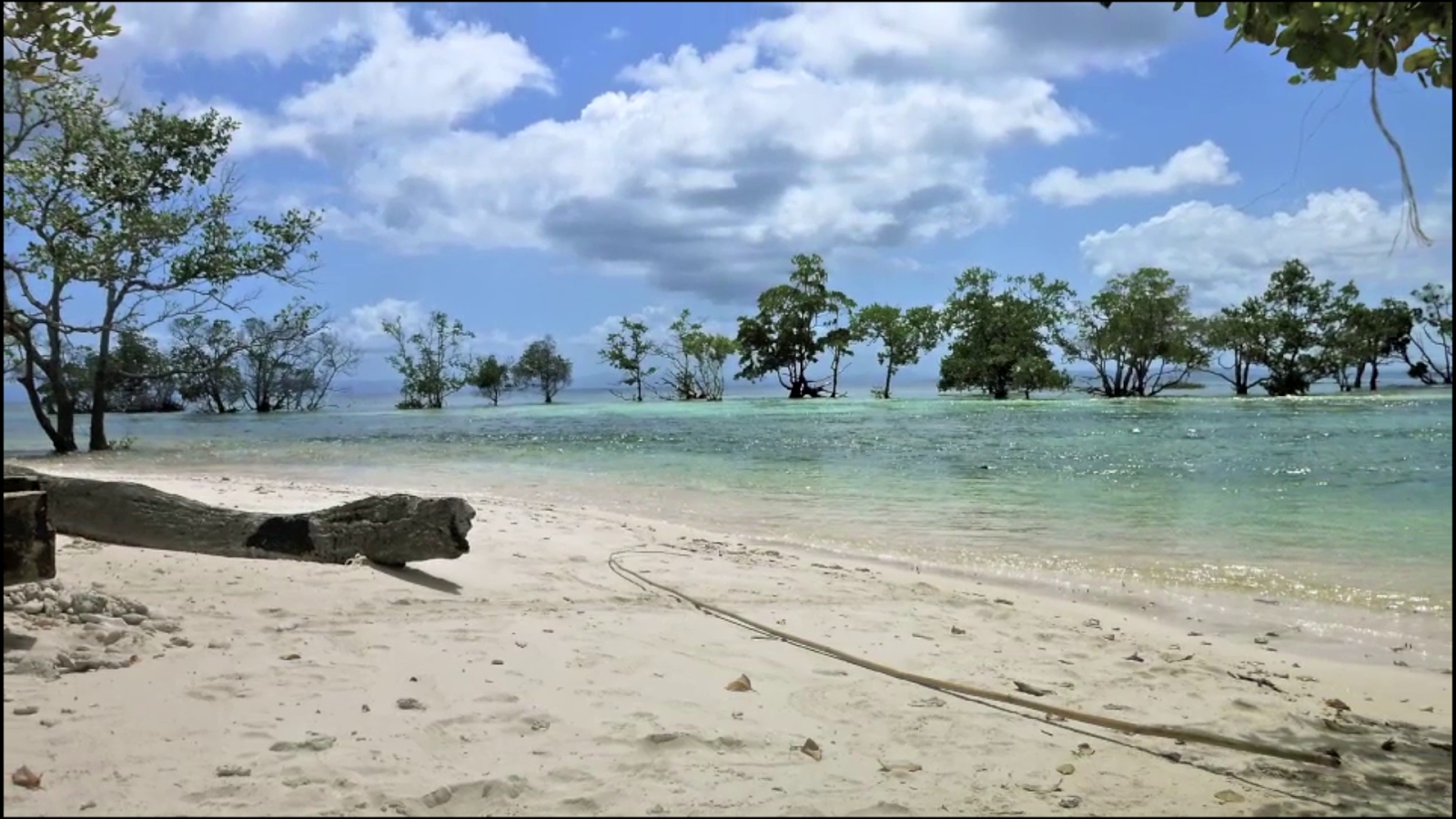
The Blue Pacific
Source: Pacific Islands Forum Secretariat
Pacific countries demonstrate innovation in sustainably developing, managing, and conserving their part of the Pacific Ocean
The Blue Pacific is the world’s largest oceanic continent, made up of a grouping of Pacific island countries and territories engaged in innovative and unique initiatives that show leadership toward strong regional ocean governance and the sustainable management and conservation of the ocean and its resources.
This was the message shared with participants of the UN Ocean Conference today by Pacific Leaders at the ‘Blue Pacific’ event, hosted and chaired by the Office of the Pacific Ocean Commissioner – Dame Meg Taylor.
Blue Pacific – Our Sea Of Islands, Our Livelihoods, Our Oceania: Achieving SDG 14 through effective implementation of Pacific Islands Regional Ocean Policy, was an opportunity for the Pacific region’s key decision makers to highlight the cooperation currently guiding ocean governance in the Pacific.
Prime Minister of Samoa Honourable Tuilaepa Sa’ilele Malielegaoi said“For many countries the ocean and SDG 14 may be of marginal importance for their political and development ambitions, but for Pacific Islands Forum members the ocean is crucial and SDG 14 a critical catalyst for placing the ocean at the heart of the Pacific’s 2030 Development Agenda through the concept of The Blue Pacific.
“The Blue Pacific seeks to recapture the collective potential of our shared stewardship of the Pacific Ocean based on an explicit recognition of our shared ocean identity, ocean geography, and ocean resources. The Blue Pacific aims to strengthen collective action as one ‘Blue Pacific Continent’ by putting The Blue Pacific at the centre of the regional policy making process and the requisite collective action for advancing the Forum Leaders’ Vision for the Region.” The President of the Federated States of Micronesia (FSM) and current Pacific Islands Forum Chair, HE President Peter Christian highlighted some of the contributions being made by FSM to conserve Pacific ocean resources saying, “The Federated States of Micronesia will continue to stand strong with leaders of the Pacific in joined-efforts to find solutions to address the most immediate needs while awaiting the longer term strategies for solutions for the damage we know will come as a result of a lack of attention to the oceans and climate change”
President of French Polynesia, HE Mr Edouard Fritch said, “The Ocean is our cultural identity. It is a cornerstone of our social cohesion. It is also the foundation of our economy and it is our road to prosperity. But the ocean is deeply threatened and endangered by human kind due to inconsiderate activities and behaviour. Climate change, overexploitation of natural resources, marine pollution from land and ocean based sources are putting our livelihoods on borrowed time.”
Republic of the Marshall Islands Minister for Transportation and Communications, Hon. Mike Halferty said, “The SDGs are an ambitious challenge for everyone and I think even more for small islands like mine But it is right that our region is pulling together strong around SDG14. In the Marshall Islands we are 99% ocean and it is our most important resource. So progress on the ocean depends on not seeing the ocean as an isolated silo but mainstreaming it into and across all development sectors.”
Pacific Ocean Commissioner and Pacific Islands Forum Secretary General, Dame Meg Taylor said that the idea of the Blue Pacific was a timely and necessary reframing for Pacific Island countries and territories to be part of a gigantic oceanic continent. A collective who worked together for the sustainable progress of their people and their environment.
“The Pacific Ocean has long been a catalyst for Pacific regionalism. It transcends our national borders and as a result it impacts many of our shared development aspirations. The 2030 Agenda for Sustainable Development and the Sustainable Development Goals (SDGs) are an opportunity for the planet to address an urgent need and focus on the health, integrity and durability of our ocean. his means rethinking the way we conserve and develop oceanic resources. In many ways, the Pacific region is a world leader when it comes to weaving our vast knowledge of the ocean into an integrated approach to ocean management. We have many things to be proud of,” said Dame Meg.
The 2030 Agenda for Sustainable Development and its 17 Goals were agreed to by 193 countries of the United Nations in 2015. Sustainable Development Goal 14 aims to conserve and sustainable use the oceans, seas and marine resources for sustainable development. It is commonly referred to as SDG 14: Life Below Water.
This week’s United Nations Ocean Conference is being co-chaired by the Governments of Fiji and Sweden and provides a platform for both state and non-state actors to build partnerships and collectively plan activities that will help achieve sustainable development goal 14 and its targets.
The Ocean Conference began in New York today (5th June) and will conclude on Friday 9th June.